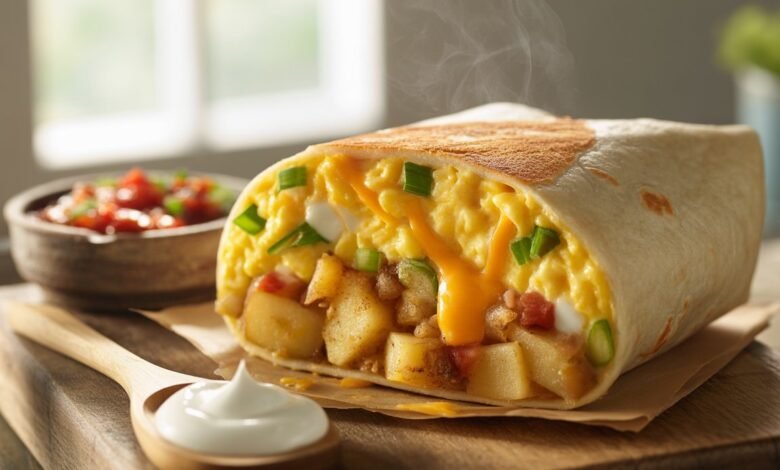
You’ve probably grabbed a breakfast burrito on your way to work and wondered why yours at home never taste quite as good. The truth is, making a great breakfast burrito isn’t complicated, but it does require knowing a few key techniques.
This breakfast burrito guide will walk you through everything from choosing the right tortilla to wrapping like a pro, so you can start your day with a handheld meal that actually holds together.
According to the USDA’s breakfast consumption data, Americans increasingly prefer portable breakfast options, with breakfast burritos ranking among the top choices for their convenience and customization potential. Whether you’re meal prepping for the week or making a quick morning bite, understanding the fundamentals changes everything.
Table of Contents
What Makes a Good Breakfast Burrito?
A good breakfast burrito balances three things: texture, flavor, and structure. You need ingredients that complement each other without making the tortilla soggy, and you need a wrap that stays closed until you’re ready to eat it. The best versions have a slight crisp on the outside, warm scrambled eggs inside, and enough seasoning that every bite tastes intentional.
Key elements include:
- Fresh tortilla – Stale tortillas crack when you fold them
- Proper egg technique – Soft scrambled, never rubbery
- Strategic layering – Wet ingredients in the middle, dry on the edges
- Right portions – Overstuffing guarantees a mess
Why Tortilla Quality Matters
Your tortilla is the foundation. Flour tortillas work better than corn for burritos because they’re more flexible and can hold more filling without breaking. Look for tortillas that are at least 10 inches in diameter and check the ingredient list real Mexican tortillas contain flour, fat, salt, and water, nothing else.
The Temperature Factor
Cold ingredients in a warm tortilla create condensation, which makes everything soggy. Room temperature fillings prevent this problem and make the burrito easier to wrap. If you’re meal prepping, let everything cool completely before assembling, then reheat the whole burrito rather than assembling it hot.
How Do You Keep a Breakfast Burrito from Getting Soggy?
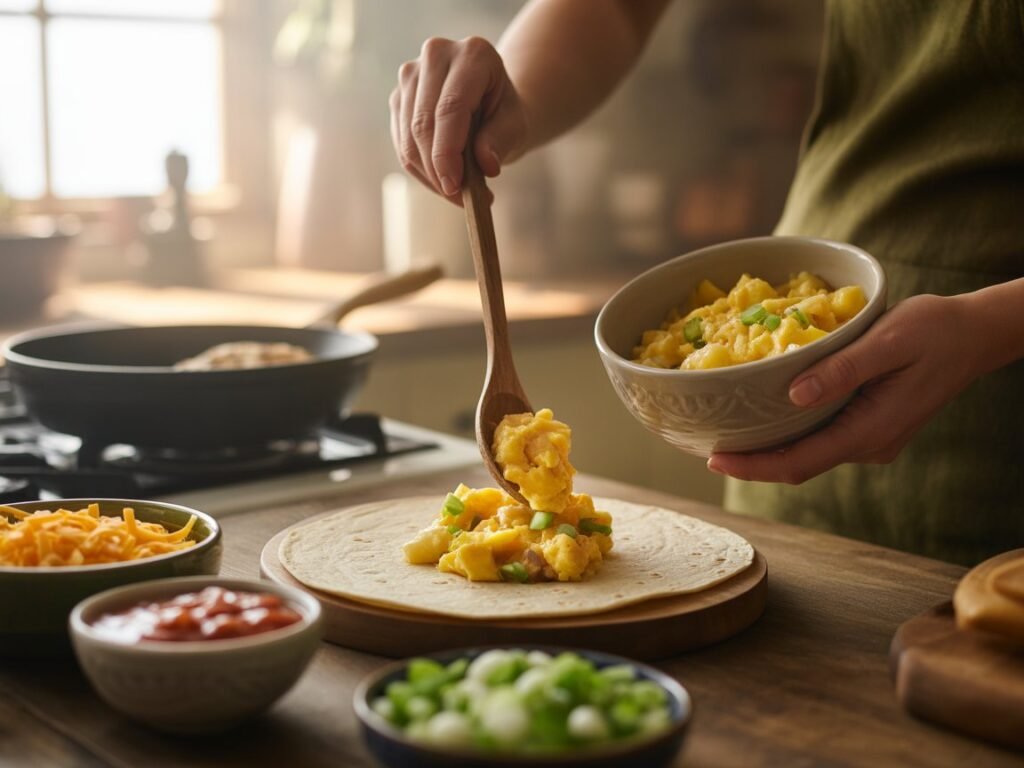
Control moisture by keeping wet ingredients away from the tortilla. Place your scrambled eggs in the center first, then add cheese while the eggs are still hot so it melts. Put salsa, sour cream, or guacamole on top of the eggs, never touching the tortilla directly. Finally, add drier ingredients like potatoes or bacon around the edges as a barrier.
According to food science research from Cook’s Illustrated, creating layers that absorb excess moisture prevents the dreaded soggy bottom that ruins most homemade burritos.
Moisture control tactics:
- Toast your tortilla lightly before filling
- Pat cooked ingredients with paper towels to remove excess grease
- Use shredded cheese as a moisture barrier
- Wrap finished burritos in foil to maintain structure without trapping steam
Pro Tip: The Double Tortilla Method
For extra-large burritos or particularly wet fillings, use two overlapping tortillas. Place them in a cross pattern, fill the center, and fold. This restaurant technique prevents blowouts and gives you more structural integrity without doubling the carbs significantly.
What Are the Best Fillings for Breakfast Burritos?
Classic combinations that work:
Protein base:
- Scrambled eggs (soft, not dry)
- Bacon or sausage
- Chorizo
- Black beans (for vegetarian options)
Vegetables:
- Bell peppers (red and green)
- Onions (sautéed, not raw)
- Jalapeños (fresh or pickled)
- Spinach or kale
Starches:
- Hash browns or tater tots
- Breakfast potatoes
- Rice (yes, rice works in breakfast burritos)
Toppings:
- Shredded cheddar or Mexican blend cheese
- Salsa (red or green)
- Sour cream
- Guacamole or sliced avocado
The American Egg Board recommends using 2-3 eggs per burrito for optimal protein content and texture. Pair eggs with one protein, one starch, and 1-2 vegetables for a balanced meal that keeps you full until lunch.
Important Consideration: Seasoning
Most homemade breakfast burritos taste bland because people forget to season each component. Salt and pepper your eggs while cooking, season your potatoes, and don’t rely on salsa alone to provide all the flavor. Cumin, paprika, and garlic powder work particularly well in breakfast burrito fillings.
How Do You Wrap a Breakfast Burrito Properly?
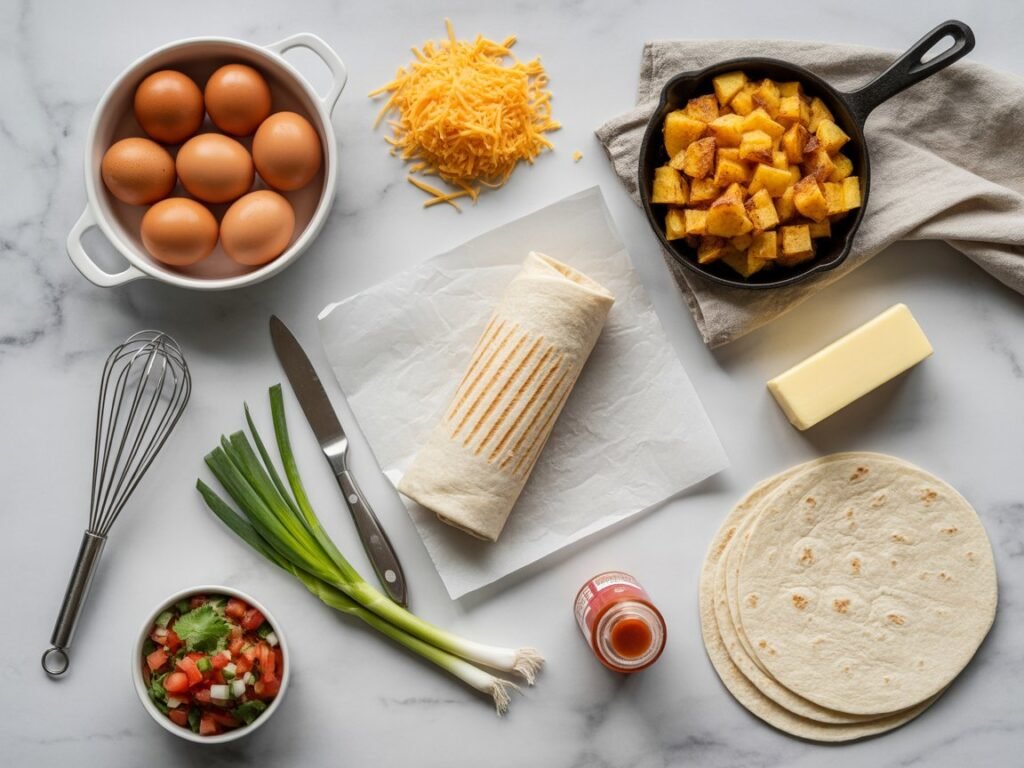
The foolproof folding technique:
- Center your filling – Keep everything in the middle third of the tortilla, leaving at least 2 inches clear on all sides
- Fold the sides – Bring the left and right edges toward the center, covering about 2 inches of filling
- Start the roll – Fold the bottom edge up and over the filling, tucking it under slightly
- Finish tight – Roll forward, keeping tension so everything stays compact
- Rest seam-side down – Let it sit for 30 seconds so the tortilla seals naturally
According to burrito-wrapping demonstrations from Chipotle’s training materials, maintaining tension throughout the roll is what separates amateur wraps from professional ones. Practice makes perfect, but even your first attempt will be better if you follow these steps.
Key Features of a Well-Wrapped Burrito
You should be able to hold it with one hand and eat it without anything falling out the bottom. The ends should be closed, not open-ended like a taco. When you cut it in half, you should see distinct layers, not a jumbled mess.
Can You Make Breakfast Burritos Ahead of Time?
Yes, and they’re actually one of the best meal-prep options available. Assemble your burritos completely, wrap them tightly in foil, then store them in freezer bags. They’ll keep for up to three months in the freezer. When you’re ready to eat one, microwave it (still wrapped in a damp paper towel) for 2-3 minutes, or heat it in the oven at 350°F for 25-30 minutes.
The USDA Food Safety guidelines recommend cooling burritos completely before freezing and reheating them to 165°F internal temperature. Label your freezer burritos with the date and contents so you can rotate through them systematically.
Meal prep success formula:
- Cook all components separately
- Let everything cool to room temperature
- Assemble on a clean, dry surface
- Wrap individually in parchment, then foil
- Freeze flat until solid, then stack
Storage Timeline Comparison
| Storage Method | Maximum Time | Best Reheating Method | Quality Rating |
|---|---|---|---|
| Refrigerated | 3-4 days | Skillet (5 min) | Excellent |
| Frozen | 3 months | Oven (25 min) | Very Good |
| Room Temp | 2 hours | Microwave (2 min) | Fair |
What’s the Difference Between a Breakfast Burrito and a Regular Burrito?
Breakfast burritos typically contain eggs as the primary protein along with breakfast meats like bacon or sausage, while regular burritos feature lunch or dinner proteins like carne asada, chicken, or beans. Breakfast versions often include potatoes or hash browns, whereas regular burritos might have rice. The flavor profiles differ too—breakfast burritos tend to be milder with cheese and salsa, while regular burritos incorporate more complex spices and sauces.
That said, these aren’t rigid rules. Californian breakfast burritos might include french fries, while New Mexican versions feature green chile regardless of the time of day. The beauty of burritos is their flexibility—you can put whatever you want inside as long as it tastes good together.
Regional Variations Worth Trying
San Diego-style: Carne asada, eggs, cheese, potatoes, and pico de gallo
Austin-style: Brisket, scrambled eggs, queso, and jalapeños
Denver-style: Ham, peppers, onions, and eggs (based on the Denver omelet)
Mission-style: Heavily stuffed with rice, beans, eggs, and salsa
Each region puts its own spin on the concept based on local ingredients and preferences. Experimenting with these variations helps you figure out what you like best.
How Do You Reheat a Breakfast Burrito Without Drying It Out?
The oven produces the best results for reheating. Wrap your burrito in a damp paper towel, then loosely in foil. Bake at 350°F for 20-25 minutes (30-35 if frozen). The steam from the paper towel keeps everything moist while the oven crisps the outside. Remove the foil for the last 5 minutes if you want a crunchier exterior.
For faster reheating, microwave it wrapped in a damp paper towel for 1-2 minutes (3-4 if frozen), flipping halfway through. The microwave won’t give you a crispy outside, but it will heat everything evenly if you use the paper towel trick.
Reheating troubleshooting:
- Too dry? Add more moisture next time with extra cheese or salsa
- Unevenly heated? Cut in half before reheating
- Soggy tortilla? Skip the damp paper towel and use lower heat for longer
- Cold center? Microwave works better than oven for thick burritos
Important Consideration: Food Safety
Never leave a breakfast burrito at room temperature for more than two hours. Eggs and dairy products can develop harmful bacteria quickly at temperatures between 40°F and 140°F, according to FDA food safety standards. When in doubt, throw it out—food poisoning isn’t worth the risk.
Frequently Asked Questions
How many calories are in a typical breakfast burrito?
Most breakfast burritos contain 400-800 calories depending on size and ingredients. Versions with bacon, cheese, and potatoes tend toward the higher end, while egg-and-vegetable burritos stay lower. You can reduce calories by using egg whites, less cheese, and more vegetables.
What tortilla size is best for breakfast burritos?
Use 10-12 inch flour tortillas for standard breakfast burritos. Anything smaller makes wrapping difficult, and larger tortillas create unwieldy portions. Burrito-size tortillas are specifically made for this purpose and are widely available in grocery stores.
Can you use corn tortillas for breakfast burritos?
Technically yes, but flour tortillas work much better. Corn tortillas are less flexible and more likely to crack when rolled tightly around fillings. If you prefer corn for dietary reasons, warm them thoroughly and don’t overfill them.
How do you prevent eggs from getting rubbery in breakfast burritos?
Cook your eggs over medium-low heat and remove them from the pan when they’re still slightly wet. They’ll continue cooking from residual heat. Adding a splash of milk or cream also keeps them tender. Never overcook eggs they should be soft and fluffy, not dry and crumbly.
What cheese melts best in breakfast burritos?
Cheddar, Monterey Jack, or Mexican blend cheeses melt smoothly and add good flavor. Pre-shredded cheese contains anti-caking agents that prevent optimal melting, so grating your own produces better results. Add cheese while the eggs are still hot so it melts naturally without additional heat.