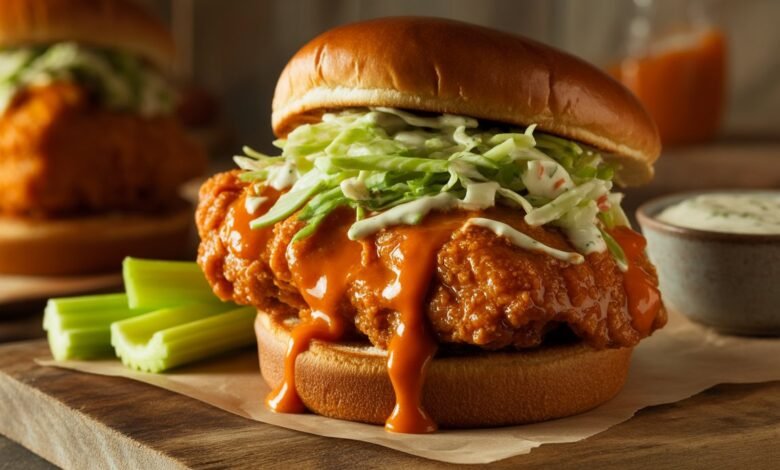
Ultimate Buffalo Chicken Sandwich Recipe: Crispy, Spicy & Irresistible
Table of Contents
The buffalo chicken sandwich recipe has become an American classic that perfectly combines fiery heat with satisfying crunch. Moreover, this iconic sandwich transforms simple ingredients into an extraordinary meal that rivals any restaurant version. Additionally, when crispy, juicy chicken is coated in tangy buffalo sauce and paired with cooling toppings, magic happens between two soft buns.
Whether you’re craving comfort food or planning game day eats, this recipe delivers bold flavors that everyone will love. Furthermore, the combination of spicy buffalo sauce and creamy ranch creates an unforgettable taste experience. Best of all, this sandwich can be prepared at home with accessible ingredients found at any American grocery store.
Why This Dish Is a Must-Try
First and foremost, this buffalo chicken sandwich stands out among other chicken recipes because it delivers restaurant-quality results without leaving your kitchen. The crispy breading provides incredible crunch, while the buttermilk marinade ensures tender, juicy chicken every single time.
Additionally, the balance between spicy buffalo sauce and cooling toppings creates layers of flavor that keep you coming back for more. The tangy heat from the sauce is perfectly offset by creamy blue cheese or ranch dressing, making each bite harmonious and satisfying.
Furthermore, this recipe is incredibly versatile. It can be fried, baked, or air-fried depending on your preference and available equipment. The customizable spice level means everyone from heat-seekers to mild-flavor lovers can enjoy this sandwich.
Most importantly, this dish brings people together. Whether it’s served at backyard barbecues, game day parties, or weeknight dinners, the buffalo chicken sandwich has earned its place as a beloved American favorite. The combination of familiar flavors and impressive presentation makes it perfect for both casual meals and special occasions.
Ingredients and instructions
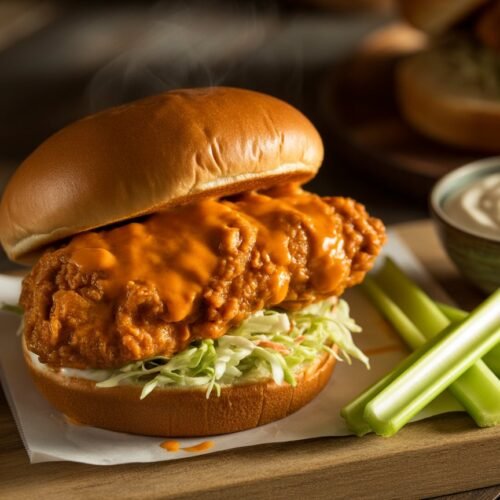
Ultimate Buffalo Chicken Sandwich Recipe
Ingredients
For the Chicken Marinade:
- 4 boneless skinless chicken breasts (about 1½ pounds total)
- 2 cups buttermilk
- ½ cup Frank’s RedHot Buffalo Sauce divided
- 2 tablespoons dill pickle juice
- 1 teaspoon garlic powder
- 1 teaspoon salt
- ½ teaspoon black pepper
For the Breading:
- 2 cups all-purpose flour
- ½ cup cornstarch
- 2 tablespoons potato starch optional, for extra crispiness
- 1 tablespoon smoked paprika
- 2 teaspoons garlic powder
- 2 teaspoons onion powder
- 1 teaspoon cayenne pepper
- 1 teaspoon baking powder
- 1 teaspoon salt
- ½ teaspoon black pepper
- 2 tablespoons buttermilk added to flour mixture
For the Buffalo Sauce Coating:
- ½ cup Frank’s RedHot Buffalo Sauce
- 4 tablespoons unsalted butter
- 1 tablespoon honey optional, for balanced sweetness
For the Ranch Coleslaw:
- 3 cups shredded iceberg lettuce or green cabbage
- ½ cup ranch dressing
- 2 tablespoons sour cream or Greek yogurt
- 2 green onions thinly sliced
- 1 tablespoon fresh dill chopped
- 1 teaspoon lemon juice
- Salt and pepper to taste
For Assembly:
- 4 brioche or potato hamburger buns
- 2 tablespoons butter for toasting buns
- Sliced tomatoes optional
- Pickles optional
- Additional ranch or blue cheese dressing for drizzling
For Frying:
- Vegetable oil canola oil, or peanut oil (approximately 4 cups)
Instructions
Step 1: Prepare and Marinate the Chicken
- First, the chicken breasts should be trimmed of excess fat and pounded to an even ¼-inch thickness using a meat mallet. This step ensures even cooking and tender results. Next, each breast can be cut in half horizontally to create thinner cutlets that fit perfectly on sandwich buns.
- In a large bowl, buttermilk, ¼ cup buffalo sauce, pickle juice, garlic powder, salt, and black pepper should be whisked together until well combined. The chicken pieces are then added to the marinade, ensuring each piece is completely coated. The bowl should be covered and refrigerated for at least 2 hours, though overnight marination yields the most flavorful and tender chicken.
Step 2: Create the Breading Station
- Meanwhile, while the chicken marinates, the breading station can be prepared. In a large, shallow dish, flour, cornstarch, potato starch, smoked paprika, garlic powder, onion powder, cayenne pepper, baking powder, salt, and black pepper should be mixed together thoroughly.
- Next, 2 tablespoons of buttermilk are added to the flour mixture and stirred with a fork until small, shaggy clumps form throughout. These clumps are essential for creating an extra-crispy, craggy coating that holds maximum sauce.
Step 3: Bread the Chicken
- When the chicken has finished marinating, it should be removed from the refrigerator. Each piece is taken from the marinade, allowing excess liquid to drip off. The chicken is then placed into the flour mixture and pressed firmly on both sides to create a thick, bumpy coating.
- After all pieces have been breaded, they should be placed on a wire rack set over a baking sheet. The breaded chicken must then be refrigerated, uncovered, for at least 30 minutes. This resting period allows the coating to adhere properly and creates an ultra-crispy crust when fried.
Step 4: Prepare the Buffalo Sauce
- While the breaded chicken rests, the buffalo sauce coating can be prepared. In a small saucepan over medium heat, butter is melted completely. The remaining ½ cup buffalo sauce is then whisked in, along with honey if desired. The mixture should be stirred occasionally and cooked until it thickens slightly, about 3-4 minutes. Once finished, the sauce is removed from heat and kept warm.
Step 5: Make the Ranch Coleslaw
- In a medium bowl, ranch dressing, sour cream, lemon juice, fresh dill, salt, and pepper are combined and whisked until smooth. The shredded lettuce or cabbage and sliced green onions are then added and tossed until everything is evenly coated. The slaw should be refrigerated until serving time to maintain its crisp texture.
Step 6: Heat the Frying Oil
- A large, heavy-bottomed pot or deep skillet should be filled with 2-3 inches of oil. The oil needs to be heated to 350°F, which can be verified using a deep-fry or candy thermometer. Maintaining the correct temperature is crucial for achieving crispy chicken without greasiness.
Step 7: Fry the Chicken
- Working in batches to avoid overcrowding, the breaded chicken pieces are carefully lowered into the hot oil. Each piece should be fried for 4-5 minutes per side until golden brown and the internal temperature reaches 165°F. As pieces finish cooking, they’re transferred to a wire rack set over a baking sheet rather than paper towels, which helps maintain crispiness.
Step 8: Coat with Buffalo Sauce
- Immediately after frying, while the chicken is still hot, each piece should be brushed generously with the prepared buffalo sauce or gently tossed in a large bowl with the sauce. The hot chicken helps the sauce adhere and creates a beautiful, glossy coating.
Step 9: Toast the Buns
- In a large skillet or griddle over medium heat, butter is melted. The hamburger buns are then placed cut-side down and toasted until golden brown and slightly crispy, about 2-3 minutes. This step prevents the buns from becoming soggy when the sandwich is assembled.
Step 10: Assemble the Sandwiches
- Finally, assembly can begin. On each toasted bottom bun, a generous portion of ranch coleslaw is spread first. The buffalo-sauced chicken is then placed on top, followed by another layer of slaw if desired. Sliced tomatoes and pickles can be added at this point. The top bun is placed on each sandwich, and they’re ready to be served immediately while the chicken is hot and crispy.
Pro Tips and Hacks
- Temperature Control: Consequently, maintaining oil temperature between 325°F and 375°F is critical. If the oil gets too hot, the breading will burn before the chicken cooks through. Conversely, oil that’s too cool creates greasy, soggy chicken.
- Double Dredging Technique: Furthermore, for an even thicker, crunchier crust, the chicken can be dipped back into the marinade after the first coating, then breaded again. This creates a substantial coating that holds plenty of sauce.
- Buttermilk Substitute: In addition, if buttermilk isn’t available, it can easily be made at home. Simply add 2 tablespoons of white vinegar or lemon juice to 2 cups of regular milk and let it sit for 5 minutes until it thickens slightly.
- Make-Ahead Strategy: Moreover, the chicken can be marinated up to 24 hours in advance for deeper flavor. The breading station can also be prepared the night before. Additionally, the slaw and buffalo sauce can be made up to 2 days ahead and stored in the refrigerator.
- Spice Level Adjustment: Therefore, to reduce heat, mild buffalo sauce can be substituted and the cayenne pepper in the breading can be decreased or omitted. For extra heat, cayenne can be increased or hotter buffalo sauce varieties can be used.
- Moisture Lock: Importantly, patting the chicken completely dry after removing it from the marinade helps the breading adhere better and creates a crispier result.
- Resting is Essential: As a result, allowing the breaded chicken to rest in the refrigerator helps the coating stick during frying and prevents it from falling off into the oil.
Tools For This Recipe
- Meat mallet or rolling pin – For pounding chicken to even thickness
- Large mixing bowls – For marinade and breading station
- Shallow dishes – For breading setup
- Wire cooling racks – Essential for keeping fried chicken crispy
- Deep-fry or candy thermometer – For monitoring oil temperature accurately
- Heavy-bottomed pot or deep skillet – For frying chicken safely
- Tongs – For handling chicken while frying
- Small saucepan – For preparing buffalo sauce
- Whisk – For mixing marinades and sauces
- Baking sheets – For holding breaded chicken and draining fried pieces
Tips For Success
- Always pound chicken to even thickness – This ensures uniform cooking and prevents dry, overcooked edges while the center finishes
- Don’t skip the marinating time – At least 2 hours is needed for tender, flavorful chicken; overnight is even better
- Use a thermometer for oil temperature – Guessing oil temperature leads to inconsistent results and potentially dangerous situations
- Never overcrowd the frying pot – Crowding drops the oil temperature dramatically and results in greasy, soggy chicken
- Let breaded chicken rest before frying – The 30-minute rest allows the coating to set and prevents it from sliding off during cooking
- Place fried chicken on a wire rack – Paper towels make the bottom soggy; a rack allows air circulation for all-around crispiness
- Sauce the chicken immediately after frying – Hot chicken helps the sauce stick and creates that signature glossy coating
- Toast the buns thoroughly – This creates a barrier that prevents the buns from getting soggy from the sauce and toppings
- Assemble sandwiches right before serving – Pre-assembled sandwiches become soggy quickly; build them fresh for the best experience
- Keep oil temperature consistent – Monitor and adjust heat throughout frying to maintain 350°F for perfect results every time
Serving Advice and Pairing Options
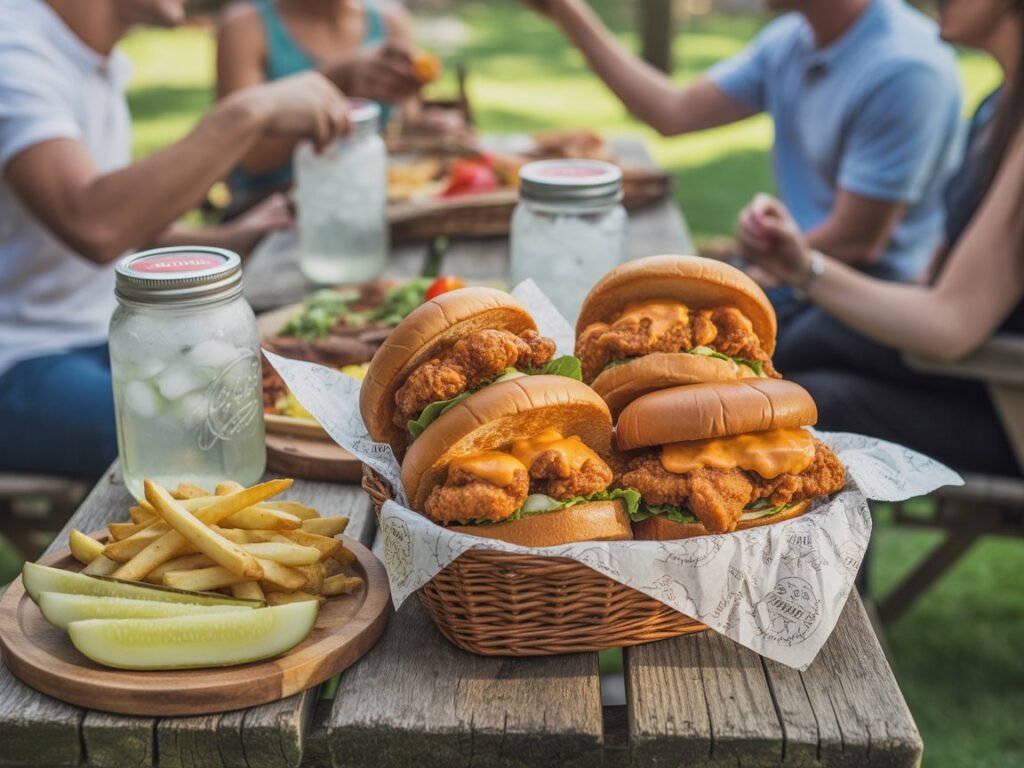
This recipe pairs beautifully with classic American sides. Consequently, crispy French fries or sweet potato fries make excellent companions that can be dunked in extra ranch dressing. Similarly, crunchy potato chips provide satisfying texture contrast without requiring additional cooking.
Furthermore, a simple green salad with tangy vinaigrette helps balance the richness of the fried chicken. Caesar salad works particularly well, as does a fresh coleslaw served on the side rather than on the sandwich. Additionally, creamy macaroni salad or potato salad rounds out the meal perfectly for picnics and gatherings.
For beverages, ice-cold lemonade, iced tea, or classic American sodas complement the spicy, tangy flavors wonderfully. A creamy milkshake also provides a cooling contrast to the buffalo heat.
When serving at parties, these sandwiches can be cut in half diagonally for easier eating. Moreover, setting up a topping bar with extra ranch, blue cheese dressing, pickles, jalapeños, and various hot sauces allows guests to customize their sandwiches to their preferences.
Storage and Heating Instructions
- Refrigerator Storage: Leftover fried chicken should be stored separately from buns and toppings in an airtight container for up to 3-4 days in the refrigerator
- Freezer Storage: Fried chicken can be frozen for up to 2 months; freeze pieces in a single layer on a baking sheet first, then transfer to freezer bags
- Slaw Storage: Ranch coleslaw should be kept in a separate container and will stay fresh for 2-3 days in the refrigerator
- Reheating in Oven: Place refrigerated chicken on a wire rack over a baking sheet and reheat at 375°F for 10-12 minutes until crispy and heated through
- Reheating in Air Fryer: Air fry at 375°F for 6-8 minutes, flipping halfway through, for quick reheating with maintained crispiness
- Reheating from Frozen: Frozen chicken can be reheated directly in a 400°F oven for 15-20 minutes without thawing
- Avoid Microwave: Microwaving makes the breading soggy and rubbery; oven or air fryer methods are always preferred
- Never Store Assembled Sandwiches: Assembled sandwiches become soggy quickly; always store components separately and assemble fresh when ready to eat
Alternative Cooking Methods
Air Fryer Method:
The chicken can be air-fried at 400°F for 10-12 minutes, flipped, then cooked for an additional 10-12 minutes until golden and crispy. Cooking spray should be applied to both the basket and chicken before cooking. This method significantly reduces oil while still delivering crispy results.
Baked Method:
Alternatively, chicken can be baked at 425°F for 15 minutes, flipped, then baked for another 12-15 minutes until the internal temperature reaches 165°F. A light coating of cooking spray helps achieve browning. While not quite as crispy as fried, this method is healthier and requires less attention.
Grilled Method:
For a lighter version, the marinated chicken can be grilled over medium-high heat for 6-8 minutes per side. After grilling, the chicken is brushed with buffalo sauce. This method creates smoky, charred flavors that complement the buffalo sauce beautifully.
Frequently Asked Questions (FAQs)
Can chicken breasts be substituted with chicken thighs?
Absolutely! Boneless, skinless chicken thighs actually work wonderfully in this recipe. Thighs contain more fat, which makes them incredibly juicy and flavorful. They should be pounded to even thickness and cooked to the same 165°F internal temperature.
How can I make this recipe less spicy?
Several adjustments can tone down the heat. Mild buffalo sauce can be used instead of hot varieties. The cayenne pepper in the breading can be reduced or omitted entirely. Additionally, extra ranch dressing or blue cheese dressing provides cooling contrast that balances any remaining heat.
What can replace blue cheese if I don’t like it?
Ranch dressing makes an excellent substitute that most people enjoy. Alternatively, a simple mayonnaise-based sauce with herbs, honey mustard, or even a creamy garlic aioli all work beautifully with buffalo chicken.
Why is my breading falling off during frying?
This usually happens because the breaded chicken wasn’t rested long enough before frying. The coating needs at least 30 minutes in the refrigerator to set properly. Also, the chicken should be patted very dry after marinating, as excess moisture prevents proper adhesion.
What’s the best oil for frying?
Neutral oils with high smoke points work best. Vegetable oil, canola oil, and peanut oil are all excellent choices. These oils can withstand high temperatures without burning and don’t impart strong flavors to the chicken.