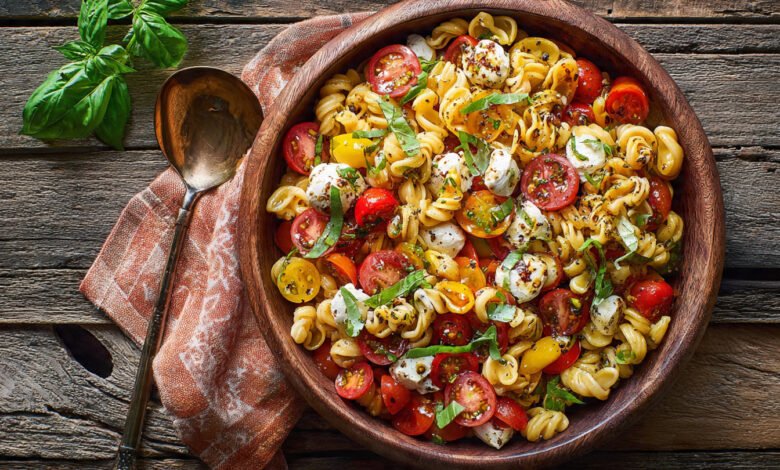
Caprese Pasta Salad Recipe (Fresh, Easy, and Perfect for Summer Potlucks)
Table of Contents
A well-made Caprese Pasta Salad should taste like summer in an American kitchen: juicy tomatoes, creamy mozzarella, fragrant basil, and pasta that carries every drop of a bright, tangy dressing.
The beauty of this dish is restraint. The strongest versions do not overload the bowl; they rely on the proven combination of tomatoes, basil, mozzarella, olive oil, and balsamic-style acidity, with optional support from lemon, garlic, oregano, red onion, or grated hard cheese to sharpen the flavor without burying the Caprese identity.
Recipe summary
- Serving size: 8 servings, about 1 1/4 cups each. First-page recipes commonly range from 6 to 10 servings depending on pasta quantity and whether the salad is served as a side or light entree.
- Prep time: 15 minutes.
- Cook time: 10 minutes. Comparable top results range from about 10 to 15 minutes depending on pasta shape.
- Rest time: 20 to 30 minutes for the flavors to meld, which is repeatedly recommended in leading recipes.
- Calories: About 345 per serving for this version, aligned with similar first-page recipes listing roughly 336 to 359 calories per serving.
Why this recipe works
Great Caprese Pasta Salad depends on ingredient quality and balance more than complexity. Top recipes repeatedly emphasize sweet cherry or grape tomatoes, fresh mozzarella in small pieces, plenty of basil, and a dressing light enough to coat without drowning the salad.
Texture matters just as much. The best pasta salad recipes call for short pasta shapes such as fusilli, rotini, cavatappi, farfalle, penne, orecchiette, or radiatore because they hold dressing well and mix evenly with tomatoes and cheese.
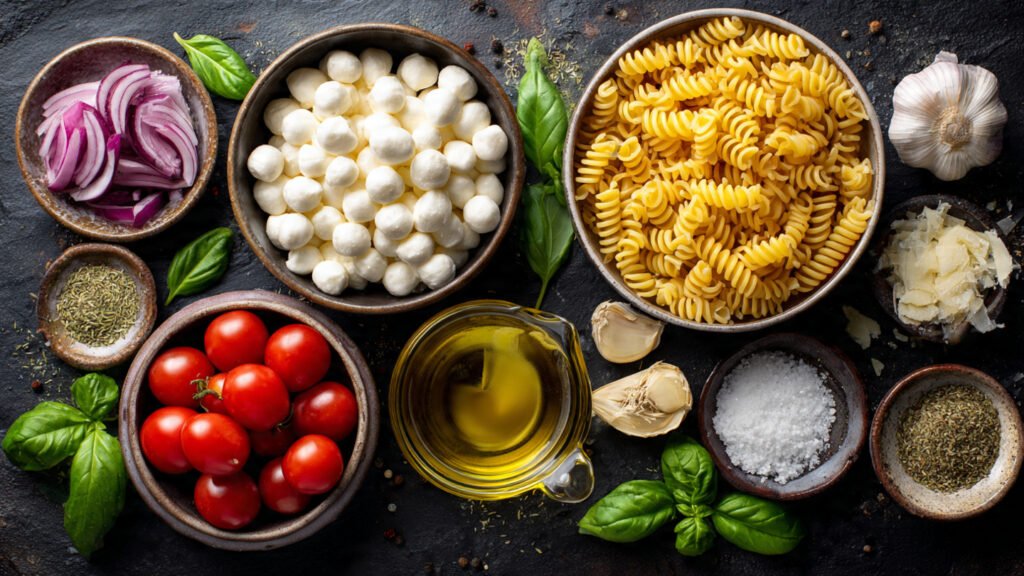
Ingredients and Instructions
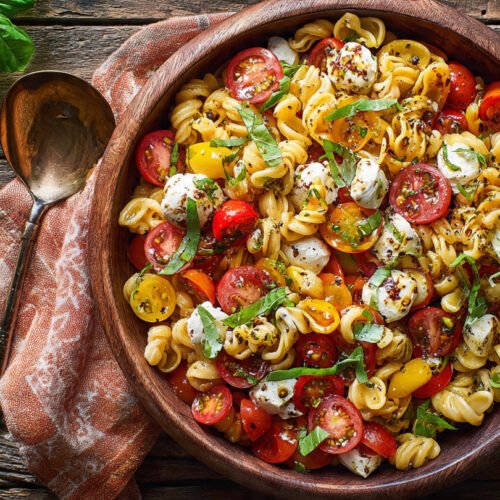
Caprese Pasta Salad
Ingredients
For the pasta salad
- 12 ounces fusilli rotini, or cavatappi pasta
- 3 cups cherry tomatoes halved
- 12 ounces fresh mozzarella pearls or ciliegine drained and halved if large
- 1/2 cup thinly sliced fresh basil plus more for garnish
- 1/4 cup very thinly sliced red onion
- 1/4 cup finely grated parmesan or pecorino optional
- 1 to 2 tablespoons balsamic glaze for finishing
For the dressing
- 1/3 cup extra-virgin olive oil
- 2 tablespoons white balsamic vinegar or regular balsamic vinegar
- 1 1/2 tablespoons fresh lemon juice
- 1 garlic clove finely grated or minced
- 1/2 teaspoon dried oregano
- 3/4 teaspoon kosher salt
- 1/2 teaspoon freshly ground black pepper
Instructions
Cook the pasta
- Bring a large pot of well-salted water to a boil and cook the pasta until just al dente or barely past al dente, depending on your preferred texture. The first-page results split slightly here, with some recommending true al dente and others preferring pasta a touch softer for cold salads.
- Drain and rinse lightly under cold water, then let the pasta drain thoroughly and cool. Several top recipes specifically rinse or cool the pasta to stop cooking, reduce stickiness, and protect the basil and tomatoes from heat.
Make the dressing
- In a large bowl, whisk together the olive oil, balsamic vinegar, lemon juice, garlic, oregano, kosher salt, and black pepper until emulsified. Mason jar shaking also appears frequently in the first-page recipes and works just as well.
Build the salad
- Add the cooled pasta to the bowl with the dressing and toss well so the pasta absorbs flavor first. Then add the tomatoes, mozzarella, red onion, and basil, and toss gently until evenly combined. Leading recipes consistently dress the pasta before or alongside the fresh ingredients, and several stress gentle mixing to protect the mozzarella and basil.
Rest and finish
- Let the salad sit for 20 to 30 minutes before serving so the pasta can absorb some dressing and the tomatoes can release a little juice into the bowl. That short resting time is one of the most repeated success tips across the first-page results.
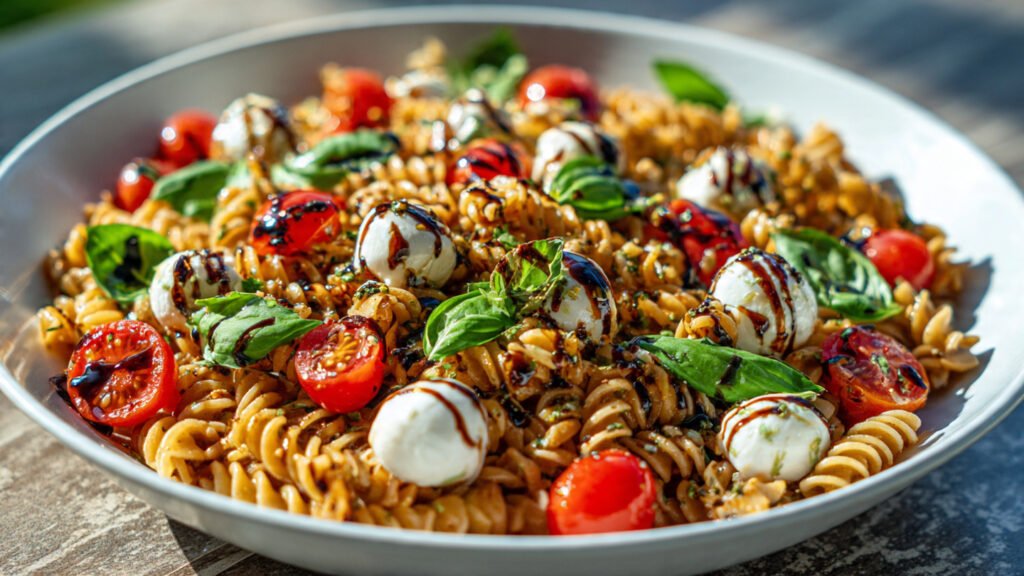
Chef Notes
I can tell you this kind of salad lives or dies by tomato quality and restraint with the dressing. The first-page recipes support that logic too: they consistently favor cherry or grape tomatoes because they are sweeter, less watery, and easier to hold in a cold salad than larger sliced tomatoes.
A few practical notes make a big difference:
- Use fresh mozzarella packed in water, not low-moisture block mozzarella, because that soft creamy bite is central to Caprese flavor.
- Add basil close to serving time if making the salad ahead, since several top recipes note that basil darkens or softens as it sits.
- White balsamic keeps the salad brighter in color, while regular balsamic gives deeper flavor and a darker finish.
- For an American summer cookout version, grilled chicken or shrimp are among the most common protein add-ins mentioned by first-page recipes.
Serving
Caprese Pasta Salad is most often framed on page one as a summer side for BBQs, picnics, potlucks, packed lunches, and casual backyard dinners. It pairs especially well with grilled chicken, steak, salmon, sausages, burgers, sandwiches, and crusty bread.
Recipe FAQs
Can I make Caprese Pasta Salad ahead of time?
Yes. Several top recipes recommend making it ahead, but many also suggest keeping the basil separate until closer to serving for the freshest flavor and appearance.
What is the best pasta shape for Caprese Pasta Salad?
Fusilli, rotini, cavatappi, farfalle, penne, orecchiette, and other short sturdy shapes are the most common recommendations because they hold dressing well and stay easy to serve.
Should I use mozzarella pearls or cut larger mozzarella?
Either works. First-page recipes frequently use mozzarella pearls, ciliegine, bocconcini, or chopped fresh mozzarella, depending on what is easiest to find.
Can I use regular balsamic instead of white balsamic?
Yes. Top results show both styles, though one leading recipe notes that white or golden balsamic keeps the salad from taking on a darker brown tint.