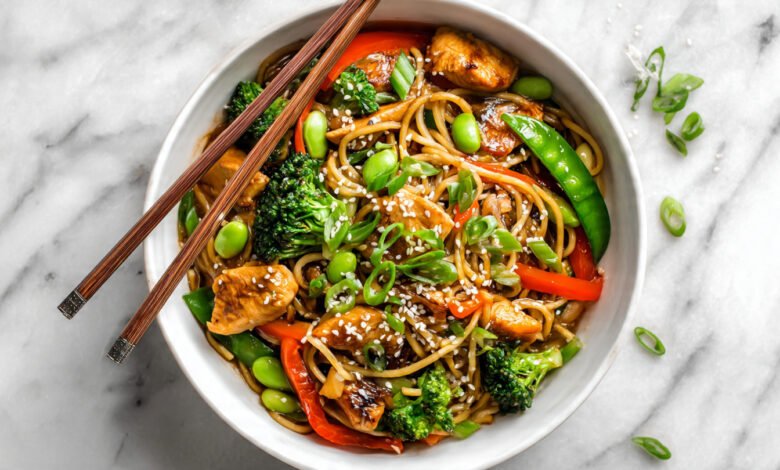
Chicken Teriyaki Noodles – Sweet, Savory & Ready in 20 Minutes
Table of Contents
Okay, let’s talk noodles. Not just any noodles — silky, saucy, sticky, slurp-worthy noodles that are wrapped in a homemade teriyaki glaze so good you’ll be scraping the bottom of the pan.
That’s exactly what this Chicken Teriyaki Noodles recipe delivers every single time you make it. Imagine juicy, golden-brown chicken thighs tossed with springy noodles, vibrant stir-fried vegetables, and a rich sweet-savory teriyaki sauce that clings to every strand from end to end.
What’s even better? The whole thing comes together in one single skillet in under 20 minutes flat. So go ahead and put that takeout menu back in the drawer — dinner is happening right here, right now.
Why Noodles Take This Dish to the Next Level
First of all, noodles do something that rice simply can’t — they wrap around the sauce in a way that makes every single bite deeply coated and incredibly satisfying. Each strand acts like a little vehicle for that sticky, glossy teriyaki glaze, delivering big flavor in every forkful or chopstick pull.
Furthermore, noodles cook faster than rice, which means this dish genuinely comes together in record time without sacrificing any of the flavor.
Beyond that, the texture combination here is what really sets this recipe apart. You’ve got springy, chewy noodles, tender juicy chicken with a slightly crispy sear, and crisp-tender vegetables that still have a little snap to them.
Together, they create a bowl that’s interesting and satisfying from the very first bite all the way to the very last. Honestly, once you make this, regular pasta nights are going to feel pretty boring by comparison.
Which Noodles Should You Use?
Great question — and the answer depends on what you have available. Thin spaghetti or angel hair pasta is probably the most widely available option and works absolutely beautifully in this dish.
Lo mein noodles or udon noodles are available in the Asian foods aisle at most major US grocery stores and deliver an even more authentic texture.
Rice noodles are a fantastic gluten-free alternative that soaks up the sauce remarkably well. Ultimately, any long, slurpable noodle works here — so use what you’ve got and don’t stress about it.
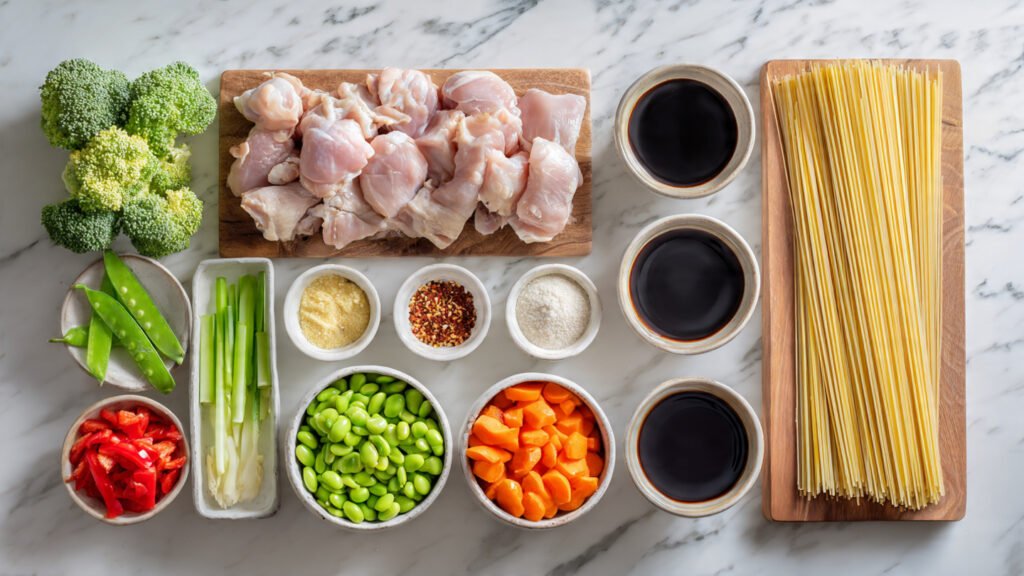
Ingredients
For the Chicken:
- 1½ lbs boneless, skinless chicken thighs, cut into bite-sized pieces
- ½ teaspoon salt
- ¼ teaspoon black pepper
- ½ teaspoon garlic powder
- ½ teaspoon onion powder
- ¼ teaspoon ground ginger
- 1 tablespoon avocado oil or vegetable oil
For the Homemade Teriyaki Sauce:
- ⅓ cup low-sodium soy sauce
- 3 tablespoons honey
- 2 tablespoons brown sugar
- 2 tablespoons rice vinegar (or apple cider vinegar)
- 2 cloves garlic, minced
- 1 teaspoon fresh ginger, grated
- 1 teaspoon sesame oil
- 1 tablespoon cornstarch + 2 tablespoons cold water (slurry for thickening)
- ¼ teaspoon red pepper flakes (optional)
For the Noodles & Veggies:
- 8 oz thin spaghetti, lo mein noodles, or udon noodles
- 2 cups broccoli florets
- 1 cup shredded carrots
- 1 cup snow peas
- 1 cup cremini mushrooms, sliced
- ½ cup red bell pepper, thinly sliced
- ½ cup frozen edamame, thawed
- 3 green onions (scallions), sliced — whites and greens separated
For Garnish:
- 1 teaspoon toasted sesame seeds
- Sliced scallion greens (reserved from above)
- Optional: drizzle of sriracha or chili oil
Step-by-Step Instructions
Step 1 – Make the Teriyaki Sauce
To start, whisk together the soy sauce, honey, brown sugar, rice vinegar, garlic, grated ginger, sesame oil, and red pepper flakes in a small bowl until the sugar is fully dissolved and the sauce is smooth. Then, in a separate tiny bowl, combine the cornstarch and cold water and stir until completely lump-free. Pour that slurry into the sauce and give it one final whisk. Set the sauce aside — it’s ready to go the moment everything else is cooked. This whole step takes about two minutes and makes all the difference between a thin, watery sauce and a thick, glossy, restaurant-worthy glaze.
Step 2 – Boil the Noodles
Next, bring a large pot of salted water to a boil and cook your noodles according to the package directions until just al dente — slightly underdone is actually ideal here. Why? Because the noodles will finish cooking when they hit the hot skillet with the sauce, and you don’t want them turning mushy. Once done, drain them and toss with just a tiny drizzle of sesame oil to prevent sticking. Set aside.
Step 3 – Sear the Chicken
Meanwhile, season the chicken pieces with salt, pepper, garlic powder, onion powder, and ground ginger. Heat the avocado oil in a large skillet or wok over medium-high heat until it’s shimmering hot. Add the chicken in a single layer — no crowding — and let it cook undisturbed for 3 minutes on the first side. Flip and cook for another 2 to 3 minutes until golden brown on both sides and cooked through to an internal temperature of 165°F. Transfer the chicken to a plate and set it aside. Do not clean the skillet — those flavorful brown bits left in the pan are liquid gold.
Step 4 – Stir-Fry the Vegetables
In that same skillet over medium-high heat, add a touch more oil if needed, then toss in the scallion whites, broccoli florets, carrots, snow peas, mushrooms, and red bell pepper. Stir-fry everything together for about 3 to 4 minutes, keeping the vegetables moving constantly. You want them bright, tender-crisp, and still colorful — not soft and wilted. Add the edamame in the last minute since it just needs to warm through. Season lightly with a pinch of salt and pepper.
Step 5 – Add the Noodles and Sauce
Now, add the cooked noodles directly into the skillet with the vegetables. Pour the teriyaki sauce all over the top and use tongs to toss everything together vigorously. As the sauce heats up over medium heat, it will thicken and begin coating every strand of noodle and every piece of vegetable in that beautiful, glossy glaze. This takes about 2 minutes of constant tossing. Add the cooked chicken back into the skillet and toss once more until everything is evenly combined, beautifully coated, and piping hot throughout.
Step 6 – Garnish and Serve
Remove the skillet from the heat and immediately plate the noodles into bowls or serve straight from the pan. Sprinkle each serving with toasted sesame seeds and sliced scallion greens. Add a drizzle of sriracha or chili oil for anyone who wants a little heat. Serve right away — these noodles are at their absolute best when eaten fresh and hot, while the sauce is still thick and clinging to every strand.
Pro Tips for Perfect Teriyaki Noodles
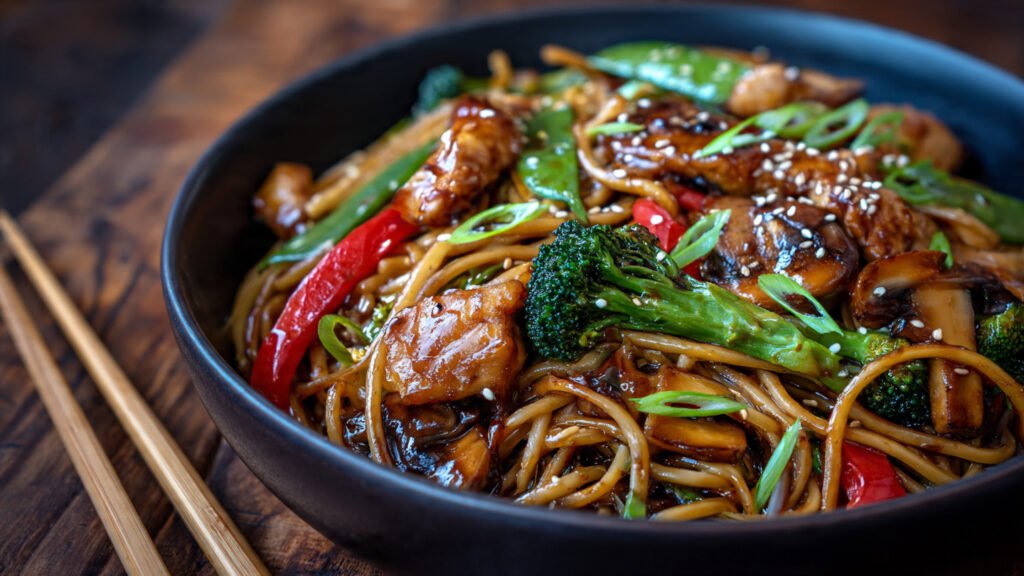
- Cook noodles al dente: Slightly undercooked noodles in the boiling water stage is the move here. They’ll finish cooking when tossed in the hot sauce and come out perfectly chewy, not mushy.
- High heat for stir-frying: Vegetables need aggressive heat to stay crisp and develop a little char on the edges. Reduce the heat and they’ll steam instead of sear — and that’s where the texture goes wrong.
- Prep everything before you start: This dish moves fast once the skillet gets hot. Have your sauce mixed, noodles drained, vegetables cut, and chicken seasoned before you turn on a single burner.
- Don’t skip the sesame oil finish: Sesame oil added right at the end brings a deep, nutty aroma that ties the entire dish together. Never add it to a screaming-hot pan or its delicate flavor will disappear instantly.
- Make extra sauce: The noodles will absorb the sauce as they sit. If you’re planning leftovers, double the sauce recipe and store the extra in a jar in the fridge for up to two weeks. Toss it in when reheating to bring the dish right back to life.
Recipe FAQs
What noodles work best for this recipe?
Thin spaghetti is the most widely available and accessible option at every US grocery store — it works perfectly. Lo mein noodles, udon noodles, and rice noodles (for a gluten-free version) are all fantastic alternatives found in the Asian foods aisle at stores like Walmart, Kroger, and Whole Foods.
Can I use chicken breasts instead of thighs?
Absolutely. Chicken breasts are leaner and work great in this stir-fry — just cut them into thin, even strips so they cook quickly and stay tender. Pull them from the heat the moment they reach 165°F internally to prevent drying out.
Why are my noodles clumping together?
After draining, toss the noodles immediately with a small drizzle of sesame oil or vegetable oil to coat them lightly. This keeps them separated and prevents them from sticking together while you finish cooking the chicken and vegetables.
Can I add other vegetables?
Of course! Bok choy, snap peas, shredded cabbage, zucchini, baby corn, or even spinach all work beautifully in this stir-fry. Just add heartier vegetables earlier and more delicate greens like spinach right at the very end so they wilt gently without overcooking.
Can I marinate the chicken ahead of time?
Yes — and it makes a noticeable difference. Toss the seasoned chicken pieces in 3 tablespoons of the teriyaki sauce and let it marinate in the refrigerator for 30 minutes or overnight. The flavor will be significantly deeper and the chicken even more tender when it hits the hot skillet.
Chicken Teriyaki Noodles Recipe Card
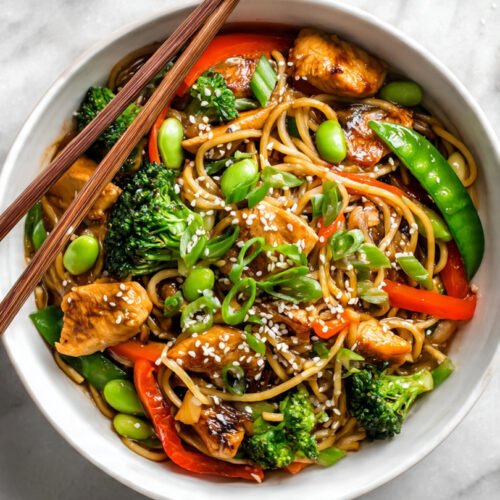
Chicken Teriyaki Noodles Recipe
Ingredients
For the Chicken:
- 1½ lbs boneless skinless chicken thighs, cut into bite-sized pieces
- ½ teaspoon salt
- ¼ teaspoon black pepper
- ½ teaspoon garlic powder
- ½ teaspoon onion powder
- ¼ teaspoon ground ginger
- 1 tablespoon avocado oil or vegetable oil
- For the Homemade Teriyaki Sauce:
- ⅓ cup low-sodium soy sauce
- 3 tablespoons honey
- 2 tablespoons brown sugar
- 2 tablespoons rice vinegar or apple cider vinegar
- 2 cloves garlic minced
- 1 teaspoon fresh ginger grated
- 1 teaspoon sesame oil
- 1 tablespoon cornstarch + 2 tablespoons cold water slurry for thickening
- ¼ teaspoon red pepper flakes optional
For the Noodles & Veggies:
- 8 oz thin spaghetti lo mein noodles, or udon noodles
- 2 cups broccoli florets
- 1 cup shredded carrots
- 1 cup snow peas
- 1 cup cremini mushrooms sliced
- ½ cup red bell pepper thinly sliced
- ½ cup frozen edamame thawed
- 3 green onions scallions, sliced — whites and greens separated
For Garnish:
- 1 teaspoon toasted sesame seeds
- Sliced scallion greens reserved from above
- Optional: drizzle of sriracha or chili oil
Instructions
Step 1 – Make the Teriyaki Sauce
- To start, whisk together the soy sauce, honey, brown sugar, rice vinegar, garlic, grated ginger, sesame oil, and red pepper flakes in a small bowl until the sugar is fully dissolved and the sauce is smooth. Then, in a separate tiny bowl, combine the cornstarch and cold water and stir until completely lump-free. Pour that slurry into the sauce and give it one final whisk. Set the sauce aside — it’s ready to go the moment everything else is cooked. This whole step takes about two minutes and makes all the difference between a thin, watery sauce and a thick, glossy, restaurant-worthy glaze.
Step 2 – Boil the Noodles
- Next, bring a large pot of salted water to a boil and cook your noodles according to the package directions until just al dente — slightly underdone is actually ideal here. Why? Because the noodles will finish cooking when they hit the hot skillet with the sauce, and you don’t want them turning mushy. Once done, drain them and toss with just a tiny drizzle of sesame oil to prevent sticking. Set aside.
Step 3 – Sear the Chicken
- Meanwhile, season the chicken pieces with salt, pepper, garlic powder, onion powder, and ground ginger. Heat the avocado oil in a large skillet or wok over medium-high heat until it’s shimmering hot. Add the chicken in a single layer — no crowding — and let it cook undisturbed for 3 minutes on the first side. Flip and cook for another 2 to 3 minutes until golden brown on both sides and cooked through to an internal temperature of 165°F. Transfer the chicken to a plate and set it aside. Do not clean the skillet — those flavorful brown bits left in the pan are liquid gold.
Step 4 – Stir-Fry the Vegetables
- In that same skillet over medium-high heat, add a touch more oil if needed, then toss in the scallion whites, broccoli florets, carrots, snow peas, mushrooms, and red bell pepper. Stir-fry everything together for about 3 to 4 minutes, keeping the vegetables moving constantly. You want them bright, tender-crisp, and still colorful — not soft and wilted. Add the edamame in the last minute since it just needs to warm through. Season lightly with a pinch of salt and pepper.
Step 5 – Add the Noodles and Sauce
- Now, add the cooked noodles directly into the skillet with the vegetables. Pour the teriyaki sauce all over the top and use tongs to toss everything together vigorously. As the sauce heats up over medium heat, it will thicken and begin coating every strand of noodle and every piece of vegetable in that beautiful, glossy glaze. This takes about 2 minutes of constant tossing. Add the cooked chicken back into the skillet and toss once more until everything is evenly combined, beautifully coated, and piping hot throughout.
Step 6 – Garnish and Serve
- Remove the skillet from the heat and immediately plate the noodles into bowls or serve straight from the pan. Sprinkle each serving with toasted sesame seeds and sliced scallion greens. Add a drizzle of sriracha or chili oil for anyone who wants a little heat. Serve right away — these noodles are at their absolute best when eaten fresh and hot, while the sauce is still thick and clinging to every strand.
Related Recipes