Table of Contents
Lemon herb chicken marinade with olive oil is one of those back-pocket recipes that quietly turns simple weeknight chicken into something bright, juicy, and restaurant-level without making life complicated.
What this marinade does?
In this kitchen, this dish is treated like a flavor booster that works hard for very little effort. The lemon juice and zest brighten the chicken, while olive oil, garlic, and herbs keep each piece juicy, tender, and deeply seasoned from edge to center.
At the same time, the marinade is kept flexible, so it can be used on boneless skinless chicken breasts for meal prep, or on thighs when a little extra richness is wanted. Because the ingredients are common in American grocery stores, the whole thing feels realistic for busy weeknights and relaxed weekend grilling.
Why this dish is a must-try
This recipe deserves a spot in regular rotation for a few reasons that matter in a real American kitchen. First, the lemon and garlic not only bring big flavor, they naturally help tenderize the meat, so the chicken stays moist instead of drying out.
Additionally, the fresh or dried herbs—like oregano, thyme, rosemary, and parsley—layer in that “grilled on the patio” aroma, even if the chicken is cooked on a stovetop skillet or in the oven. Finally, the whole recipe is friendly to a variety of sides, from rice and roasted potatoes to simple salads, which makes planning dinner and leftovers much easier.
Tools for this recipe
- Measuring cups and spoons, for accurate marinade ratios every time
- Microplane or fine grater, for easy lemon zest and finely grated garlic
- Medium mixing bowl or glass measuring cup, to whisk the marinade together
- Large resealable plastic bag or shallow glass baking dish, for marinating the chicken safely in the fridge
- Tongs, to move marinated chicken without piercing it too much
- Instant-read thermometer, to confirm the chicken reaches 165°F in the thickest spot
- Grill, oven, or large skillet, depending on cooking method and weather
Pro tips and hacks
- The lemon zest is used generously, because zest carries the lemon oils that give powerful flavor without extra acidity.
- A little olive oil is left in the bowl after pouring the marinade, and the empty bowl is used to toss veggies—like zucchini, bell peppers, or asparagus—in that leftover mixture before roasting or grilling alongside the chicken.
- When grilling, the chicken is started over more direct heat for color, then finished over medium heat so the outside does not burn before the inside reaches a safe temperature.
- If meal prepping, extra chicken is marinated and then some of it is frozen raw in the marinade in dated freezer bags; it is then thawed in the fridge and cooked on a busier day.
- For kids or anyone sensitive to spice, the red pepper flakes are skipped, and sweetness can be rounded out with a teaspoon of honey in the marinade if a hint of balance is wanted.
Tips for success

To keep this lemon herb chicken marinade with olive oil reliable every time, a few key habits are followed.
- The marinating time is kept under about 4 hours, because too much acid from the lemon can start to toughen or “over-cure” the exterior of the chicken.
- The salt level is checked after cooking rather than over-salting the marinade; a light sprinkle of salt on sliced chicken just before serving often makes the flavors pop.
- The pan or grill is not overcrowded, because crowding traps steam and prevents browning, which leads to pale, less flavorful chicken.
- The internal temperature is always checked, since color can mislead; 165°F in the thickest part of the meat is the standard for safety with chicken.
Serving advice and pairing options
In American home kitchens, this kind of chicken tends to show up everywhere—from quick lunches to weekend cookouts.
- Over rice, quinoa, or couscous bowls with roasted vegetables, it becomes a complete, balanced plate with very little extra effort.
- Sliced and tucked into warm flour tortillas or pita with lettuce, tomato, cucumber, and a yogurt or ranch-style sauce, it turns into an easy wrap or handheld meal.
- Added cold to chopped salads with romaine, cherry tomatoes, cucumbers, and a simple vinaigrette, it makes a high-protein lunch that packs easily for school or work.
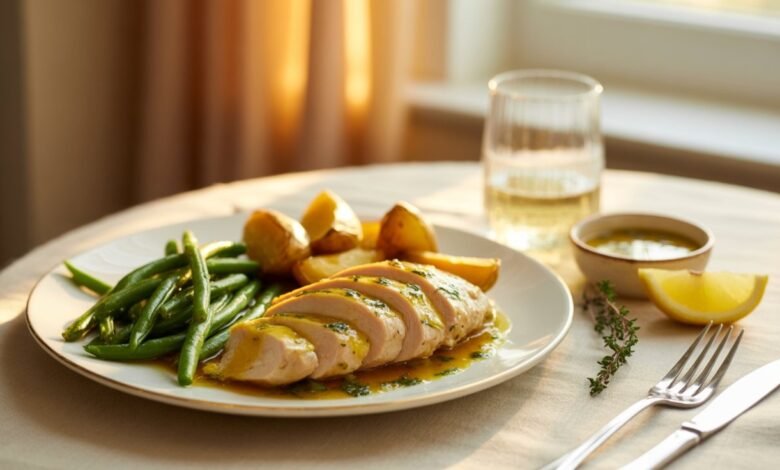
- Served alongside mashed potatoes or roasted baby potatoes and green beans, it fits right into a classic American “meat and two sides” dinner.
Storage and reheating instructions
Once the meal is over, the leftovers are handled with the same care, so nothing goes to waste.
- Cooked chicken is cooled to room temperature (no more than 2 hours out), then stored in airtight containers in the refrigerator for up to 3–4 days.
- For longer storage, the fully cooked chicken is sliced and frozen in freezer-safe bags or containers for up to 2–3 months, with as much air pressed out as possible to reduce freezer burn.
For reheating, the goal is gentle heat so the chicken stays tender.
- On the stovetop, slices are warmed in a covered skillet over low heat with a splash of water or broth until heated through.
- In the microwave, pieces are reheated in short bursts (20–30 seconds at a time) with a microwave-safe cover, flipping once to keep them from drying out.
- For salads and wraps, the chicken is often enjoyed cold, straight from the fridge, which keeps meal prep quick and easy.
Health benefits
- Lean chicken breast or thigh provides high-quality protein that supports muscle maintenance and overall body repair, while staying relatively low in carbohydrates.
- Garlic is rich in antioxidants and may support heart health by helping maintain healthy blood pressure and cholesterol levels when enjoyed as part of a balanced diet.
- Lemons supply vitamin C and flavonoid antioxidants, which can support immune function and skin health and may help protect cells from oxidative stress.
- Olive oil is high in monounsaturated fats and antioxidants and has been linked to cardiovascular benefits when used instead of saturated fats.
- Combining lemon juice, garlic, chicken, and olive oil creates a meal that is nutrient-dense yet moderate in calories, which can fit well into a heart-conscious eating pattern.
Recipe FAQs
1. How long should chicken sit in a lemon herb marinade with olive oil?
In most home kitchens, a window of 30 minutes to about 4 hours is used; after that, the acidity in the lemon can start changing the texture of the chicken in a way that feels a bit mushy on the outside.
2. Can frozen chicken be marinated?
Frozen chicken can be placed in the marinade while it thaws in the fridge, and as it defrosts, it starts absorbing flavor; however, the total time in the refrigerator should still stay within safe food safety guidelines.
3. Is this marinade good for grilling only?
This marinade works extremely well on the grill, but it also performs nicely in the oven or a stovetop skillet, which makes it useful all year long, even when grilling weather is not ideal.
4. Can dried herbs be used instead of fresh?
Dried herbs are often used in American pantries, so they can easily be swapped in; usually about one-third the amount of dried herb is used in place of fresh, since dried herbs are more concentrated.
5. Is the chicken spicy?
By default, the chicken is more bright and savory than spicy, and the gentle heat only comes from optional red pepper flakes, which can be reduced or left out altogether.
Ingredients and Instructions
lemon herb chicken marinade with olive oil
Ingredients
For the lemon herb chicken marinade with olive oil
- 2 pounds boneless skinless chicken breasts or thighs (or a mix), trimmed of excess fat
- 1 large lemon zested (about 2 tablespoons zest) and juiced (about 1/4 cup juice)
- 1/4 cup extra virgin olive oil
- 3 –4 cloves fresh garlic minced or finely grated
- 1 tablespoon chopped fresh oregano or 1 teaspoon dried
- 1 tablespoon chopped fresh thyme or 1 teaspoon dried
- 1 tablespoon chopped fresh rosemary or 1 teaspoon dried, optional but highly recommended for depth
- 2 tablespoons chopped fresh parsley optional, for freshness and color
- 1 teaspoon kosher salt more to taste after cooking
- 1/2 teaspoon freshly ground black pepper
- 1/4 teaspoon red pepper flakes optional for gentle heat
Simple substitutions
- If fresh herbs are not available about 1 teaspoon dried herb for each tablespoon of fresh is used instead.
- Chicken tenders or bone-in pieces can be used; cook time is simply adjusted until safe internal temperatures are reached.
Instructions
Step-by-step instructions
- Everything here is written as if the two of us are standing side by side at the counter, working through one step at a time.
Prep the chicken
- The chicken is patted dry on all sides with paper towels, because dry surfaces allow the marinade to cling more evenly. Then, very thick chicken breasts are sliced horizontally into cutlets so they cook more evenly and soak up more flavor.
Mix the lemon herb marinade with olive oil
- In a medium bowl or large measuring cup, the lemon zest, lemon juice, olive oil, garlic, herbs, salt, pepper, and red pepper flakes are whisked together until the mixture looks slightly emulsified and fragrant. As it is whisked, the aroma should already hint at how bright and savory the final chicken will taste.
Marinate the chicken
- Next, the chicken is placed in a large resealable plastic bag or a shallow glass baking dish, and the marinade is poured over the top, making sure every piece is coated. The bag or dish is sealed, the chicken is turned a few times to distribute the marinade, and then it is refrigerated for at least 30 minutes and up to 4 hours; in many lemon-based marinades, going far beyond that can start to affect the texture.
Bring to room temp briefly
- About 20–30 minutes before cooking, the chicken is removed from the fridge so it can take off the chill; this helps it cook more evenly and brown better. The pieces are allowed to sit in the marinade during this time, but they are not left out too long for food safety.
Cook the chicken: grill, bake, or pan-sear
- For grilling, a gas or charcoal grill is preheated to medium-high, the grates are oiled, and the chicken is grilled 5–7 minutes per side for breasts or cutlets, or 6–8 minutes per side for thighs, until the internal temperature reaches 165°F.
- For baking, the oven is preheated to 400°F, the chicken is placed on a lightly oiled baking sheet, and it is baked for about 18–22 minutes, depending on thickness, again aiming for 165°F in the center.
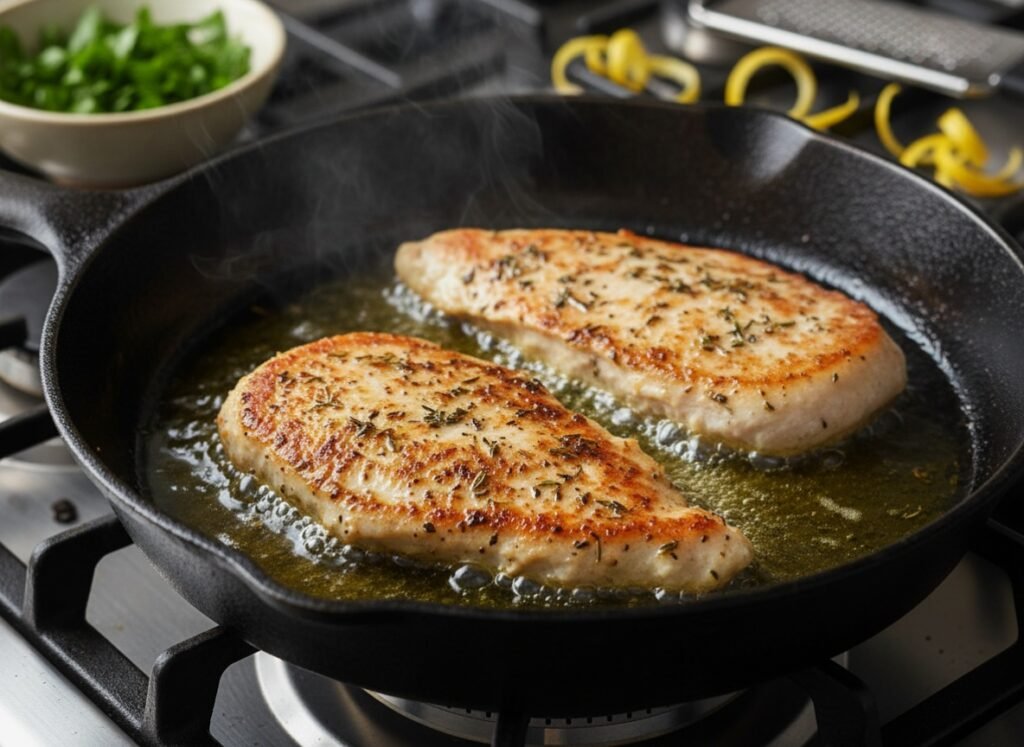
- For stovetop, a large skillet is heated over medium-high heat with a thin film of olive oil, and the chicken is cooked 5–7 minutes per side, adjusting the heat as needed to avoid burning while still getting a nice sear.
Rest and slice
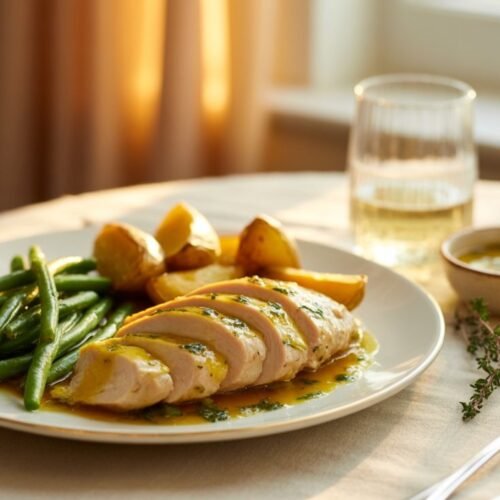
- Once cooked, the chicken is transferred to a clean plate and left to rest for 5–10 minutes so the juices can redistribute. Then, if serving sliced, the chicken is cut against the grain into strips or pieces, and any juices on the plate are spooned back over the top for extra moisture and flavor.
Related Lemon Herb Recipes
- Leftover Grilled Lemon Herb Chicken Salad
- Rice Pilaf for Lemon Herb Chicken
- Greek Salad with Grilled Lemon Herb Chicken
- Roasted Potatoes Lemon Herb Chicken Pairing
- Grilled Lemon Herb Chicken Guide